
Navigating Salt Corrosion with a Coastal Structural Engineer Florida
Living by the water in Florida brings incredible views and a relaxing lifestyle. It also brings the constant, invisible threat of salt corrosion. Ocean breezes carry microscopic saltwater droplets that settle on everything. Over time, these chlorides aggressively attack metal, concrete, and foundation systems. Managing this environmental reality requires more than routine maintenance. It requires the specialized knowledge of a professional who understands how harsh marine environments interact with building materials. Navigating salt corrosion with a coastal structural engineer Florida helps you protect your investment and ensure your property remains safe for decades.
The Science of Salt Damage on Coastal Buildings
Saltwater is an electrolyte. When it mixes with the high humidity and warm temperatures of the Florida coast, it rapidly accelerates the oxidation process of metals. This chemical reaction breaks down structural components much faster than in inland areas. The breakdown is rarely uniform and often hides beneath the surface until significant damage occurs.
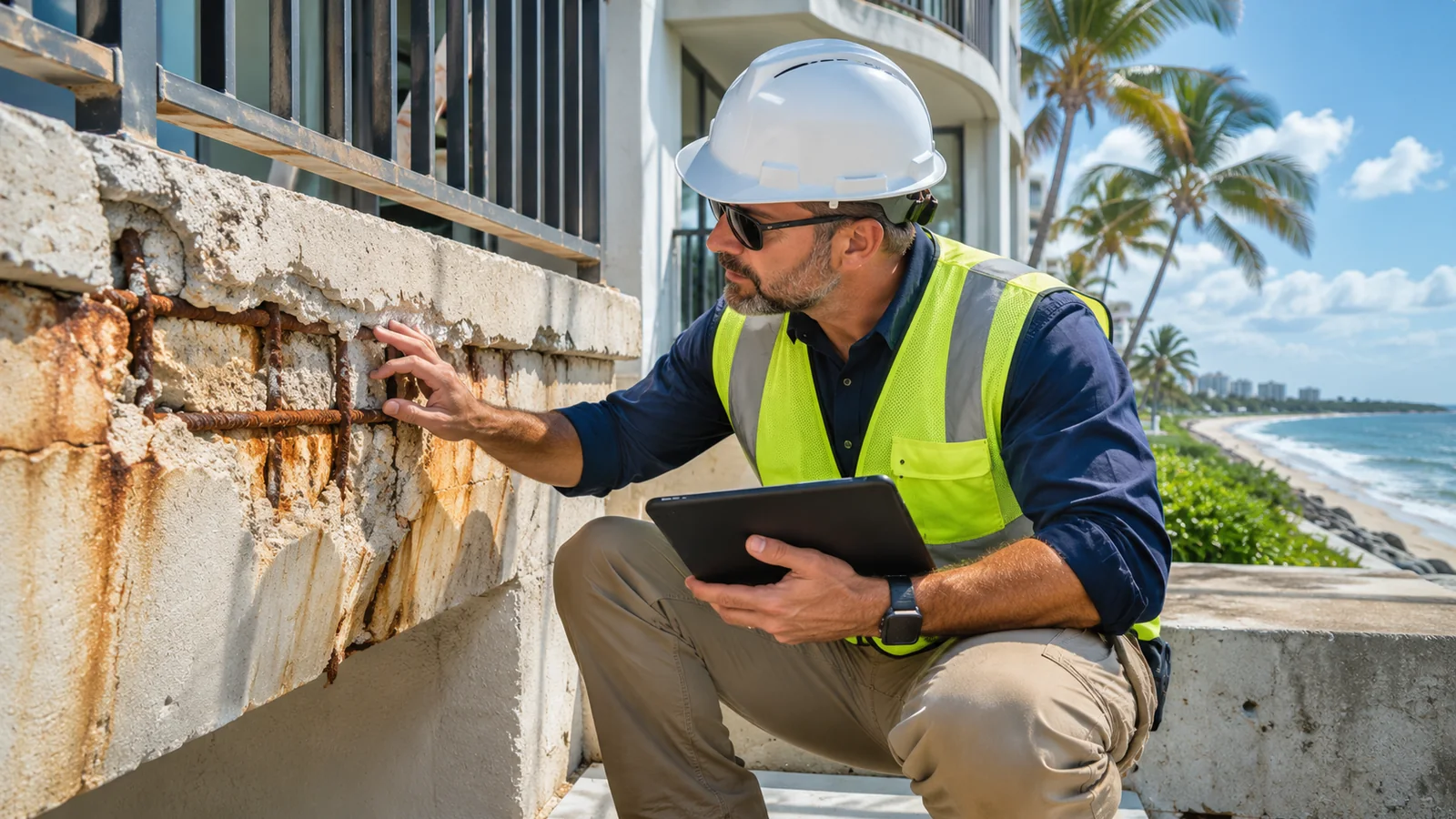
You might notice small rust stains on your exterior walls or bubbling paint on metal fixtures. These are early warning signs. In reinforced concrete, the process is far more destructive. Concrete and stucco are naturally porous materials. Airborne chlorides and saline groundwater penetrate these pores until they reach the embedded steel rebar. Once the steel begins to rust, it expands. This expansion creates internal pressure that forces the concrete to crack and break away. This process is known as spalling, and it severely weakens the structural integrity of your building.
Different materials react differently to salt exposure. Carbon steel is highly reactive and will degrade rapidly without protective coatings. Even aluminum, which is widely used for window frames and HVAC components, will pit and corrode under constant salt spray. Fasteners, roof clips, and deck bolts are particularly vulnerable. A standard galvanized screw might last decades inland but will lose half its shear strength in just a few years near the ocean. Inspecting your structural steel fasteners regularly is a vital part of preventative care.
Your property’s exterior finishes also suffer. Salt air breaks down protective paint layers, allowing moisture to penetrate directly into the underlying building materials. This moisture encourages mold and mildew growth in the humid climate. Even glass surfaces are not immune. Marine salt deposits build up on exterior windows, forming a hazy film. If left uncleaned, this chemical reaction creates permanent staining and calcification that standard cleaning products cannot remove.
How Professional Assessment Uncovers Hidden Vulnerabilities
You cannot fix a problem you cannot see. This is why you need an expert to evaluate your property. A structural engineer uses advanced techniques to assess the true condition of your building. They look past cosmetic issues to understand how deeply the salt has penetrated your building envelope.
Routine visual inspections are the first step. Professionals look for subtle indicators of structural distress, such as specific cracking patterns, chalky patches on concrete, and early signs of efflorescence. However, the most valuable assessments happen beneath the surface. Engineers utilize non-destructive testing methods to evaluate internal conditions without damaging your property. Common testing methods include:
- Ground-penetrating radar to map the condition of embedded rebar and identify areas where corrosion has started.
- Ultrasonic pulse velocity testing to measure the density and strength of the concrete.
- Half-cell potential measurements to detect active corrosion in the reinforcing steel long before cracks appear on the surface.
Your foundation is another major area of concern. Coastal soil conditions in Florida often feature high, saline groundwater tables. This water exerts hydrostatic pressure on subsurface structures while actively attacking buried steel elements. Engineers analyze these geotechnical factors to determine if your foundation requires specialized remediation. They understand the hidden risks of liquefiable sands and poorly compacted hydraulic fill, which are common in coastal zones. By gathering this precise data, they create a comprehensive picture of your property’s health.
Long-Term Mitigation and Material Selection
Treating salt corrosion requires a proactive approach. Simply patching a cracked wall or painting over rust will not stop the underlying chemical reaction. You need targeted mitigation strategies to address the root cause of the deterioration.
The first line of defense is material selection. When replacing fasteners or exposed metal components, upgrading to 316 marine-grade stainless steel is highly recommended. This alloy contains molybdenum, which provides exceptional resistance to pitting and crevice corrosion. For concrete foundations and structural columns, engineers often specify epoxy-coated rebar or fiberglass polymer reinforcement. These materials are impervious to chloride attacks and provide long-lasting stability in brackish water environments.
Another highly effective strategy is the installation of cathodic protection systems. This technology introduces a controlled electrical current to the reinforcing steel, which actively prevents the metal from corroding. It is frequently used in marine structures, seawalls, and deep foundations exposed to saltwater. While it requires an upfront investment, cathodic protection extends the service life of essential infrastructure by decades.
Your mechanical systems require protection as well. Outdoor air conditioning condensing units frequently suffer from coil degradation. Salt air eats away the micro-thin aluminum fins, reducing heat transfer efficiency. Applying factory-applied epoxy coil coatings and utilizing marine-grade composite cabinets will help your HVAC systems resist corrosion far longer than standard painted sheet metal.
Proper design geometry also plays a major role in preventing damage. Structures must be designed to shed water efficiently. Any detail that traps moisture or creates a tight crevice will accelerate corrosion. Your engineer will look for ways to modify existing structures to provide adequate drainage and reduce standing water. They might also recommend advanced surface treatments, such as migrating corrosion inhibitors and breathable elastomeric coatings, to seal out moisture while allowing trapped vapor to escape.
Protecting your coastal property is an ongoing commitment. The combination of intense sun, high winds, and corrosive salt air demands vigilant care. By partnering with a qualified professional, you gain access to the testing, materials, and strategies needed to withstand the environment. You will be able to catch minor issues early, evaluate concrete spalling, implement effective repairs, and keep your building structurally sound. Taking these steps ensures that you can enjoy your waterfront property without the constant worry of structural failure.