5StarsStocks.com Healthcare: What It Covers and How to Check It
5starsstocks.com healthcare is the healthcare stock coverage on 5StarsStocks.com, a research website that sorts content by sector and investing style. It introduces pharmaceutical, biotechnology, medical device, provider, and digital health companies. Its best-known healthcare piece is a beginner’s guide that groups these stocks into subsectors.
Healthcare is a large, technical market where company news turns on trials, regulators, and patents. A sector guide can organize that complexity, but ratings on any research site are opinions, not regulated advice. Independent reviews also raise transparency questions, including performance claims that lack published audits.
This article explains what the coverage includes, how it is organized, and which subsectors it follows. It walks through key checks, from reading ratings carefully to verifying figures against official filings. It also covers the coverage’s limits, sector risks, and a responsible step-by-step workflow.
What Is 5StarsStocks.com?
The site presents itself as a research platform built on analysis of companies, industries, and market trends. Its homepage says its team studies financial statements, competitive positions, and macroeconomic developments, and publishes reports, commentary, and educational articles.
What Does the Healthcare Section Cover?
The coverage deals with public companies that make medicines, build medical technology, deliver care, or insure it. Readers find sector explainers, company discussions inside broader stock lists, and beginner-focused educational material.
How the Healthcare Coverage Is Organized
The coverage is organized two ways: by industry sector and by investing style. Healthcare appears as one sector in the site’s stock area, inside blue-chip, dividend, and long-term lists, and in a dedicated beginner’s guide.
Who May Benefit From This Resource?
Beginners benefit most, because the guides explain subsectors and basic terms before naming companies. Experienced readers may spot unfamiliar companies or themes, then do deeper work elsewhere.
Understanding Stock Ratings and Analysis
A rating compresses an analyst’s opinion into a label, and the label is only as good as its method. Third-party reviews describe a five-star rating approach but note that its full scoring method is not publicly explained.
Using Platform Information for Further Research
A research article earns its keep when it sends readers to better evidence. Open any named company’s latest annual report, earnings release, and investor presentations before forming a view. Our Business FTAsiaStock guide shows how another business coverage hub presents the same kind of material.
Healthcare Stock Research and Company Insights
Sector coverage teaches how healthcare businesses earn money: drug sales, device placements, patient volumes, premiums, and subscriptions all behave differently. It cannot replace company-level analysis, because two firms in one subsector can have opposite financial health.
Stock Ratings and Comparison Tools
Ratings and comparisons can speed up a first pass over many companies, when available. They mislead when one score covers unlike businesses, such as a profitable device maker and a revenue-free biotech firm.
Healthcare Market News and Industry Trends
Healthcare prices react to trial results, approvals, pricing debates, and policy changes, so dated news loses value quickly. Check publication dates against the latest company announcements before relying on any trend piece. Our explainer on economy updates on OnPressCapital shows the wider economic background.
Educational Content for New Investors
The beginner material explains pipelines, patents, valuation, and diversification in plain language. Good teaching works like a well-run hosted session, framing the topic while learners check details, much as a Gimkit host runs a game while students answer.
Major Types of Healthcare Stocks
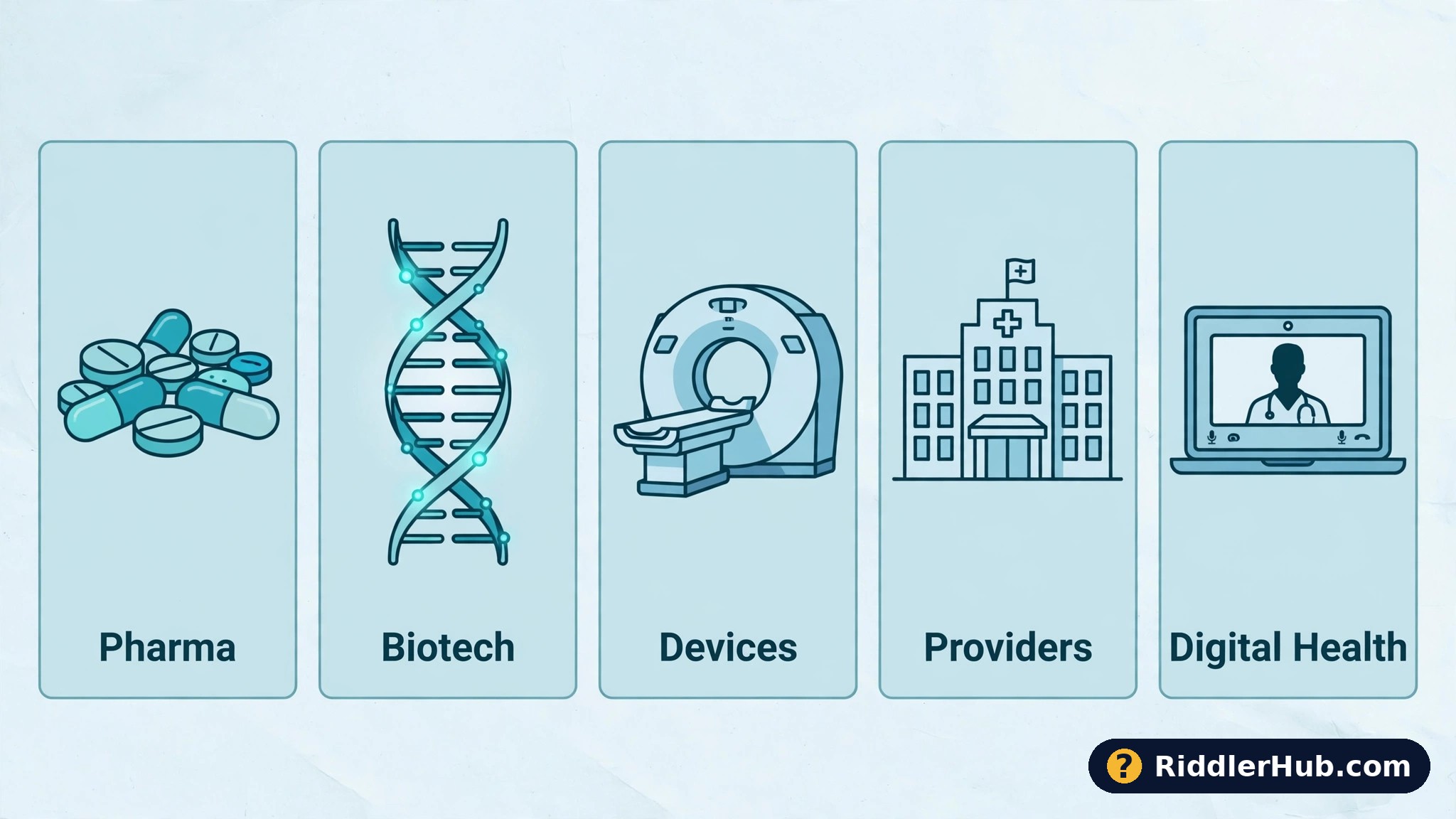
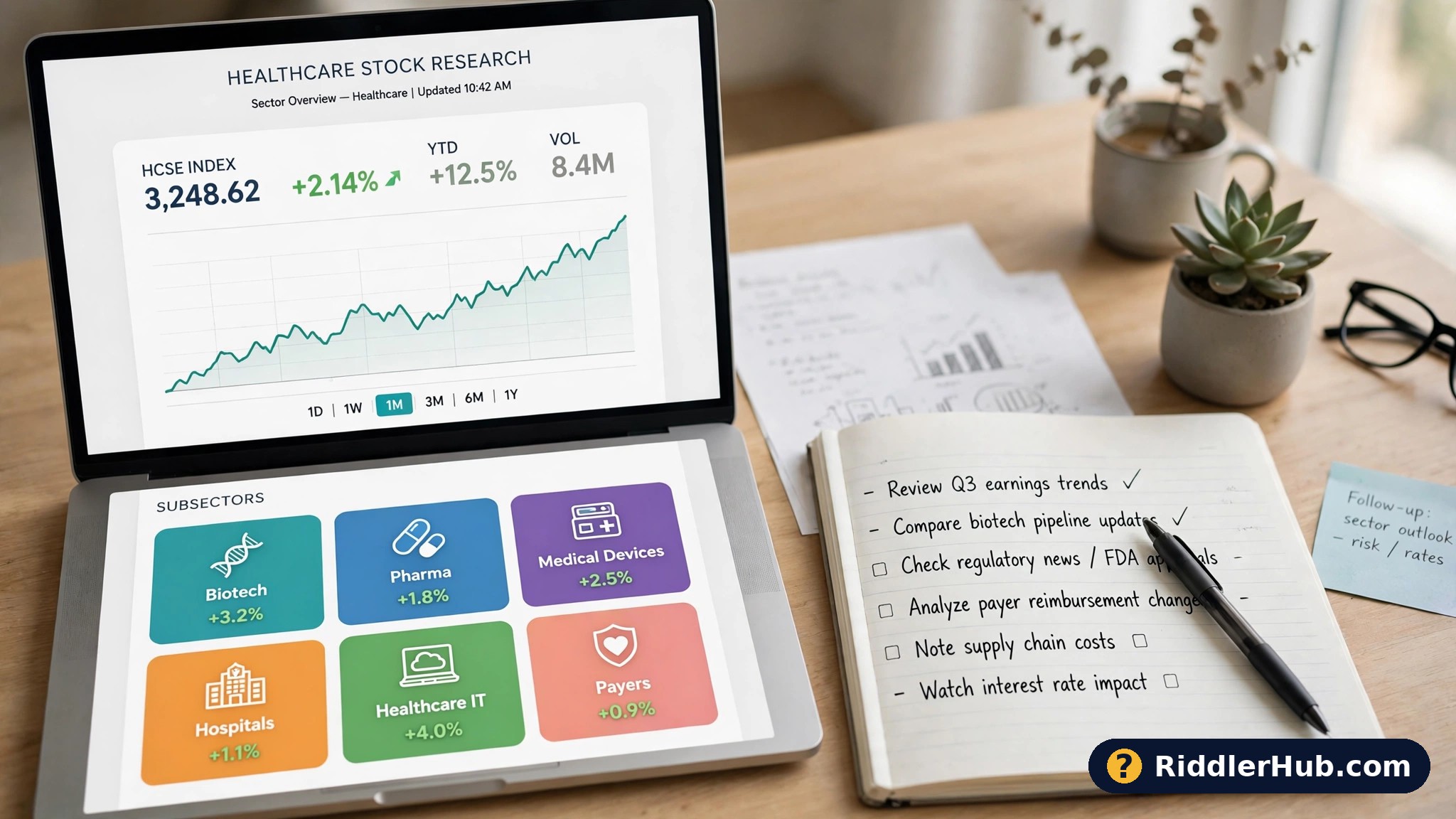
The site’s beginner’s guide groups the sector into subsectors, each running on different economics.
Pharmaceutical Stocks
Drug makers earn revenue from approved medicines, so results hinge on sales, patent protection, and pipeline products. When a major patent expires, cheaper generics can cut a bestseller’s revenue quickly.
Biotechnology Stocks
Biotech firms develop treatments from biological science, often spending years in trials before earning revenue. One trial result can move the price sharply, and cash reserves matter because research continues either way.
Medical Device and Equipment Companies
Device makers sell machines, implants, and instruments that hospitals and clinics use daily. Demand follows procedure volumes and hospital budgets, and new products must clear regulatory review first.
Healthcare Providers and Insurance Companies
Providers run hospitals, clinics, and care services, while insurers collect premiums and pay for treatment. Results depend on patient volumes, staffing costs, and reimbursement rates set by governments and insurers.
Digital Health and Telemedicine
Digital health firms sell software, virtual visits, remote monitoring, and data services. Many still compete on adoption while working toward consistent profits, under privacy and reimbursement rules.
Why Do Investors Research Healthcare Stocks?

Healthcare draws research because treatment demand is steady while the science keeps changing.
Long-Term Demand for Medical Services
People need care in good economies and bad, making healthcare demand unusually durable. Aging populations add a slow rise in treatments and medicines, but durable demand never guarantees one company’s profit.
Innovation and Potential Business Growth
New drugs, diagnostics, and devices can create markets when they outperform existing options. Most experimental treatments still fail, and development costs arrive years before any revenue.
Diversification Across Healthcare Industries
Subsectors respond to different pressures, so device makers and insurers rarely move for the same reasons. Spreading research across them softens single-company shocks without removing market-wide risk.
Check Revenue, Earnings, and Cash Flow
Start with several years of revenue, profit, and operating cash flow from company reports. Rising sales with widening losses differ sharply from slower sales with strong cash generation.
Evaluate Valuation and Financial Health
Compare valuation ratios only within a subsector, because a multiple suiting a profitable insurer misleads for a pre-revenue biotech firm. Debt, cash reserves, and funding needs show the pressure underneath.
Examine Research Pipelines and Product Approvals
The pipeline is a drug company’s future product list, so trial phases, decision dates, and patent timelines deserve close reading. Confirm claims in company releases and regulator records, not summaries.
Read Official Reports and Verify Claims
Annual reports, quarterly filings, and earnings calls are the primary record; articles are secondary. Find important numbers in the filing itself and note their dates.
Compare Research Findings Before Making Decisions
Lay the site’s view beside independent sources and company disclosures, and note disagreements. Disagreement usually marks the assumption needing more work before price and risk can be weighed.
Healthcare Investment Trends to Watch in 2026
Trend coverage helps build a reading list when each theme is checked against revenue and adoption.
Artificial Intelligence in Healthcare
AI tools are being tested in imaging, documentation, drug discovery, and patient monitoring. What matters is hospital payment and regulator acceptance, shown through contracts and revenue.
Biotechnology and Personalized Medicine
Treatments matched to genetic profiles are moving from research into selected areas of care. Testing, pricing, and reimbursement decide how widely each therapy spreads.
Robotic Surgery and Medical Devices
Surgical robots and connected monitoring devices keep spreading through large hospitals. Adoption depends on training, outcomes, and budgets, while installed systems add recurring instrument and service revenue.
Telemedicine and Digital Health
Virtual care now holds a steady role, especially for follow-ups and mental health. Profitability and retention, not visit volume, show whether a service lasts.
Such coverage helps most at the research stage, for vocabulary, subsector maps, and company leads. Its value falls near decisions, which need primary documents and personal circumstances.
Ratings Cannot Predict Future Returns
A rating is an opinion at one moment; prices move on earnings, expectations, rates, and unscheduled news. Even careful ratings can precede falling prices when markets expected more.
Information May Be Incomplete or Outdated
Web articles stay online long after their figures age out. Profiles written before earnings, trial results, or management changes may describe a business that no longer exists in that form.
Healthcare Stocks Have Unique Risks
Clinical failure, patent expiry, recalls, litigation, and pricing pressure can each erase much of a healthcare company’s value. Reimbursement changes hit insurers and providers, while approval and privacy rules hit device and digital health firms.
Transparency and Conflicts of Interest
Judge a research site by named authors, dated articles, explained methods, and disclosed interests. Independent reviews note performance claims lacking published audits and a rating method that is not publicly documented.
No Guaranteed Investment Results
No rating, article, or research service can promise profits, and sources hinting otherwise should be avoided. Markets regularly move against well-researched positions, and healthcare adds binary events.
Is 5StarsStocks.com a Financial Advisor?
No, and this point matters enough to state plainly. The site publishes general research and education; it does not know your finances, and independent reviews describe a content platform, not a regulated advisory firm. Nothing here, or in its healthcare coverage, is financial advice or a recommendation to buy or sell any security.
Check the Website’s Credibility

Open the site’s About, contact, and disclosure pages to see who stands behind the content. Popularity is a weak substitute for accuracy: writers profile even a site’s social statistics, as in this BounceMediaGroup.com social stat breakdown, yet audience numbers cannot validate claims.
Verify Information Before Relying on It
Match each important claim to a primary source before acting on it.
| Source | What it can establish | What it cannot do |
|---|---|---|
| Company filings | Revenue, profit, debt, stated risks | Predict results |
| Regulator announcements | Approvals and safety actions | Judge share prices |
| Earnings releases | Latest numbers and outlook | Replace audited statements |
| Research articles | Background and research leads | Verify themselves |
When sources conflict, the filing wins, carrying legal responsibility for its numbers.
Protect Your Personal and Financial Information
Read the privacy policy before creating accounts or joining mailing lists on any research site. Never share brokerage logins, and avoid services asking for payment or account access in exchange for picks.
How to Use 5StarsStocks.com Healthcare Content Step by Step
- Pick one subsector. Start with a single group so comparisons stay meaningful.
- Read the guide material. Learn the vocabulary and each subsector’s key questions.
- Shortlist companies, not trades. Note names mentioned, then open their official reports.
- Verify three numbers. Check revenue, cash flow, and debt in the latest filings.
- Revisit after events. Earnings, approvals, and trial results change the picture.
Frequently Asked Questions
What should I check before trusting a healthcare stock article?
Check its date, named author, and links to company reports or regulator records. Confirm key figures in the original filing; summaries can be stale or selective.
Why can a successful healthcare company have a falling share price?
Prices reflect expectations, so strong results disappoint when investors priced in stronger ones. Valuation, guidance, and sector news often move a stock more than headline numbers.
Are biotechnology stocks riskier than established healthcare companies?
Often, yes: many depend on treatments still in trials, with little revenue. Established companies face patent, pricing, and legal risks too, so it depends on the business.
How often should I review healthcare stock research?
Review it when earnings, trial readouts, or regulator decisions affect a company’s products. Between events, periodic filing checks keep information current without chasing daily moves.
Conclusion
5StarsStocks.com healthcare content gives readers a starting map of a large sector, grouping pharmaceutical, biotechnology, device, provider, and digital health companies into one research view. Its guides explain subsectors in plain language, and its broader stock coverage shows how healthcare names fit wider investing styles. That structure helps beginners build questions quickly, but every rating remains an opinion, and every figure still needs checking against primary sources before it can support a decision.
Use the coverage to discover companies and topics, then verify each important claim in annual reports, earnings releases, and SEC EDGAR company filings before acting. Treat ratings as leads for research, never as instructions, and match every idea to your own goals, timeline, and tolerance for loss.